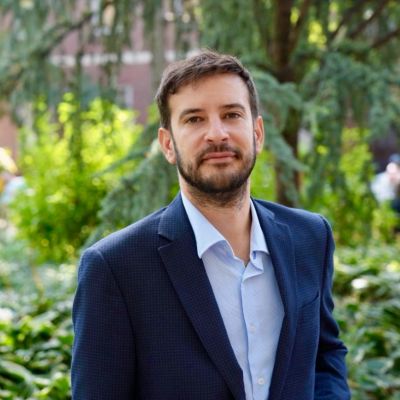
About Me
Bridging communication, policy, and law, my work examines how states and corporations contest control over the infrastructures enabling our digital interactions, and how these struggles shape geopolitics, development, innovation, and human rights. I am currently working as a researcher at the Center for Human Rights and Global Justice at NYU Law.
I study how intermediation allows tech companies to increase their centrality within information networks, and how states then strive to leverage and exploit these central positions to advance their own national priorities. My research specifies how states rely on these network points of control to push information across borders to influence foreign populations; pull information from relevant actors and companies; and cut the flow of information to coerce and censor adversaries.
I also study how these points of control can be neutralized. I argue that past experiences of Non-Alignment can serve as a focal point around which Global South countries and middle powers can coordinate such efforts and demand human-centered technological development.
My research has been published in New Media & Society, International Journal of Communication, Internet Policy Review, Temple Law Review, Journal of Cyber Policy, and Global Media & China. I also actively engage in public debates. My work has appeared in Wired, The Washington Post, Rest of World, Tech Won’t Save Us, Tech Policy Press, CNN, Fox Now, and Euractiv, among others.
My research agenda emerges from sustained engagement with policymakers, tech managers, and human rights practitioners across the world. I have managed the working groups that drafted to the Contract for the Web, a global initiative to protect digital rights launched by web inventor Tim Berners-Lee. I was also a Fellow (2017–2018) and Affiliate (2019–2024) at the Harvard Berkman Klein Center, coordinated research for UNESCO, and convened workshops where human rights activists and policymakers explored trends in digital rights and human rights in order to re-design their strategic approaches to urgent problems.
I have worked with civil society organizations across Latin America, developing digital tools to monitor judicial appointments in Buenos Aires, and exposing gaps in digital inclusion policies in Mexico, among other projects. I ground my research in open and participatory practices that involve affected stakeholders and the public. I deploy these approaches as co-initiator of the Non-Aligned Tech Movement, a network where 160+ researchers and practitioners re-imagine tech futures.
I am trained in law (Universidad Torcuato Di Tella, LLB), policy (Blavatnik School of Government, University of Oxford, MPP), internet studies (Oxford Internet Institute, MSc), and communication (USC Annenberg, PhD). I bring this interdisciplinary background to the classroom, which I combine with my broad professional experience to develop scenarios for active-learning. I strive to prepare students for decision-making positions at the intersections of technology, law, and policy.
If you’re interested in these agendas, reach out! I’m always eager to chat over coffee, Zoom or email/signal.
Go to: Publications / Media / Talks / Teaching / Full CV (or see the latest updates below)